
Cybercrime Is Becoming an Industry—Fortinet Says 2026 Will Be the Year It Hits “Machine Speed.”

The internet was never built for the world we use it in today. In its early days, it was a small network connecting researchers, universities, and government partners—a space where everyone operated on trust, and where security simply wasn’t part of the original blueprint. Nobody imagined this experimental network would evolve into the backbone of global banking, infrastructure, business, and daily life. Connectivity came first; protection would come much later.
We’re now living with the consequences of that design. Modern cybersecurity is racing to reinforce a system that was never meant to withstand automated attacks, criminal marketplaces, or AI-driven adversaries. And according to Fortinet’s newly released Cyberthreat Predictions for 2026 report, that gap between the internet we built and the threats we face is about to widen even faster.
FortiGuard Labs describes 2026 as the moment cybercrime becomes fully industrialized—an ecosystem powered by automation, specialization, and machine-speed decision-making. “Cybersecurity has become a race of systems, not individuals,” says Jonas Walker, Director of Threat Intelligence for APAC and the Middle East. “As automation, specialization, and AI redefine every stage of the attack lifecycle, the time between compromise and consequence continues to collapse.”
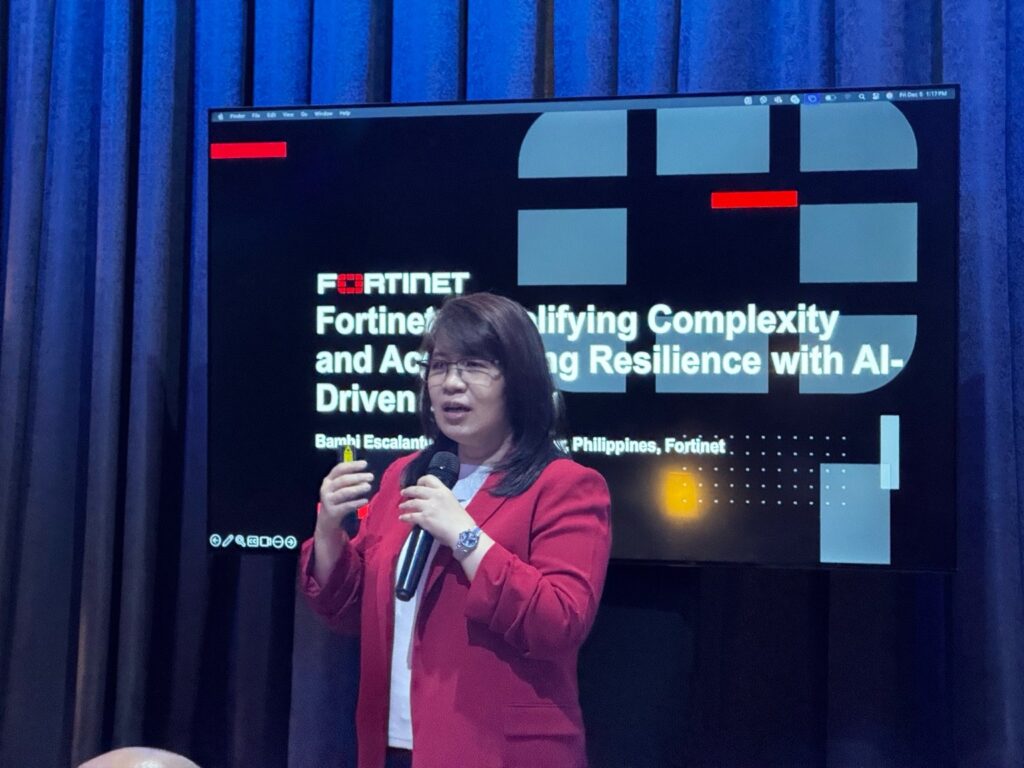
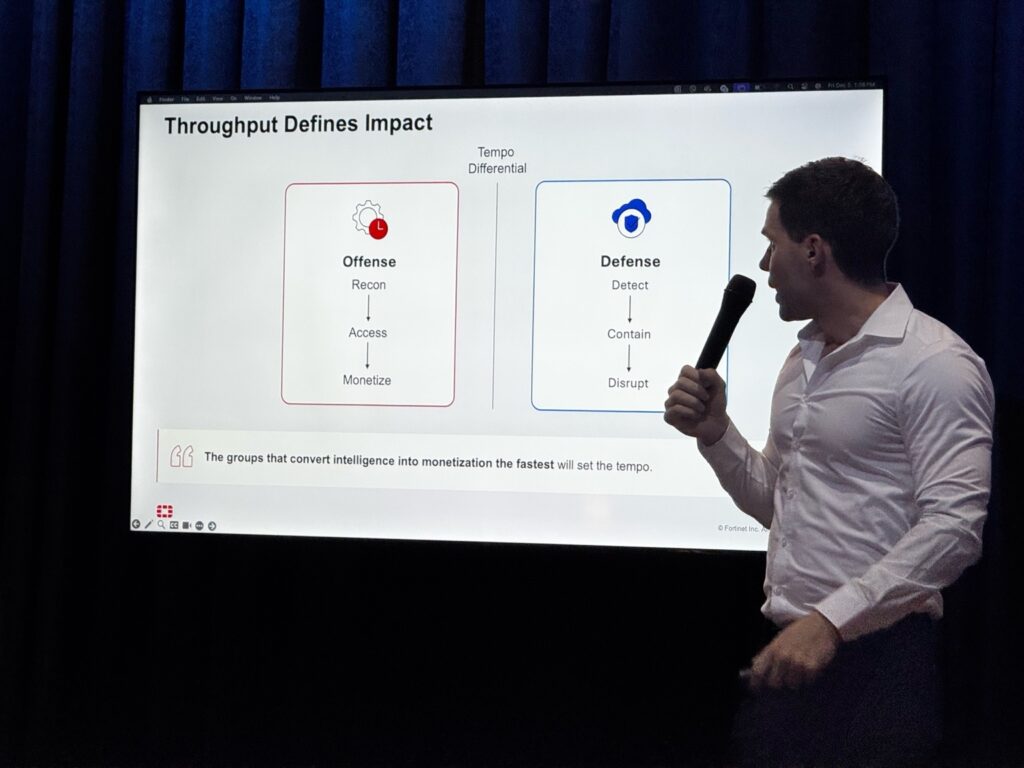
In this new landscape, the report says success for both attackers and defenders depends less on breakthrough innovations and more on one thing: throughput—how quickly intelligence can be turned into action.
From Innovation to Throughput: Cybercrime Learns to Scale
As AI and automation become more accessible to threat actors, the report notes that attackers will shift their focus from inventing new exploits to refining and automating the ones that already work. AI systems will handle reconnaissance, accelerate intrusion, parse stolen data, and even generate personalized ransom negotiations.
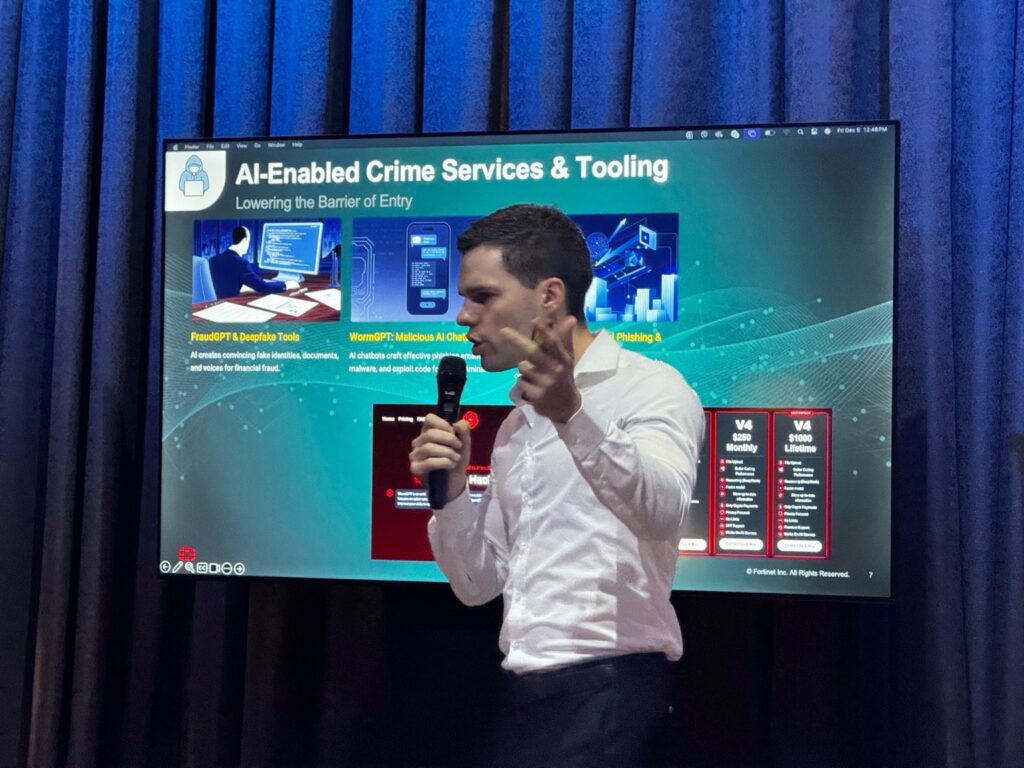
This acceleration dramatically increases attacker capacity. A ransomware affiliate that once ran only a few campaigns at once will soon manage dozens. The time between intrusion and impact will shrink from days to minutes—a speed that strains even well-equipped security teams.
Walker emphasizes the urgency of this shift: “Cybercrime is no longer an opportunistic activity, it is an industrialized system operating at machine speed.”
The Next Wave of Offense: AI Agents and Structured Black Markets
Fortinet expects 2026 to bring the rise of specialized AI agents designed to support cybercriminal operations. These agents won’t operate fully independently, but they will take over critical stages such as credential theft, lateral movement, and data monetization.
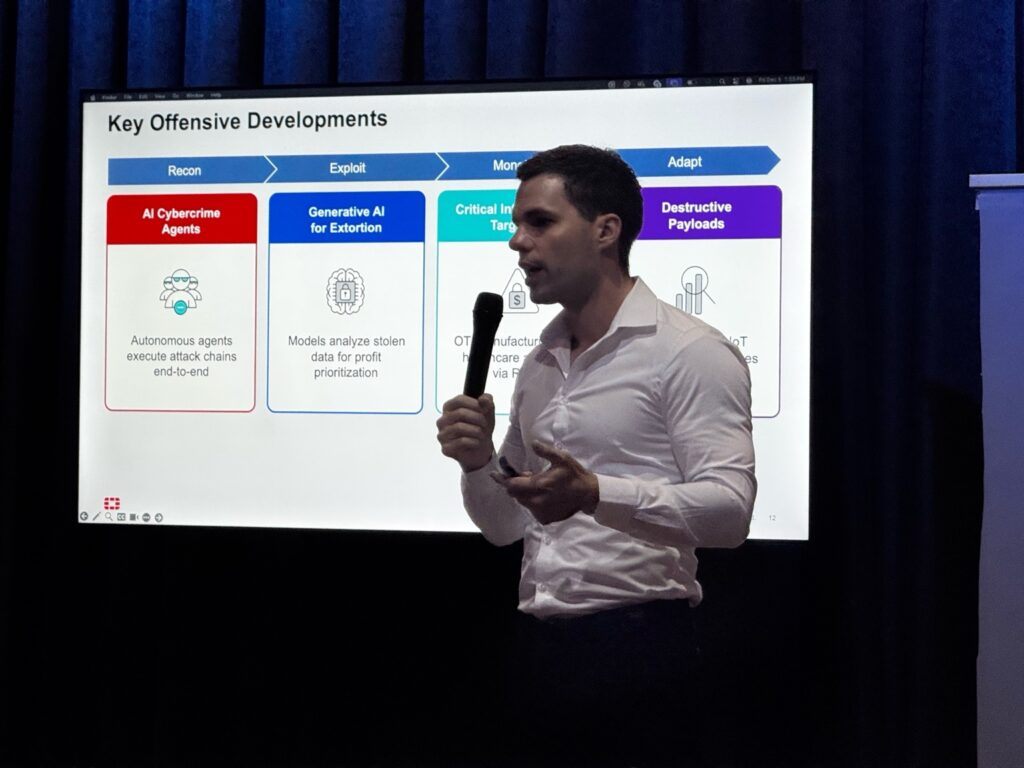
Once attackers gain access to stolen databases, AI will instantly determine:
- which victims offer the highest financial return,
- how to prioritize data, and
- what extortion messages to send.
This means data becomes currency almost immediately.
The underground economy will also become more structured. Instead of broad “access for sale” bundles, cybercriminal marketplaces will begin offering:
- industry-specific access packages,
- region-based targeting,
- and system-profile-based offerings.
Some black markets may even adopt features borrowed from legitimate e-commerce—customer support, automated escrow, and reputation scoring. These innovations push cybercrime closer to full industrialization.
Defense Must Move at Machine Speed
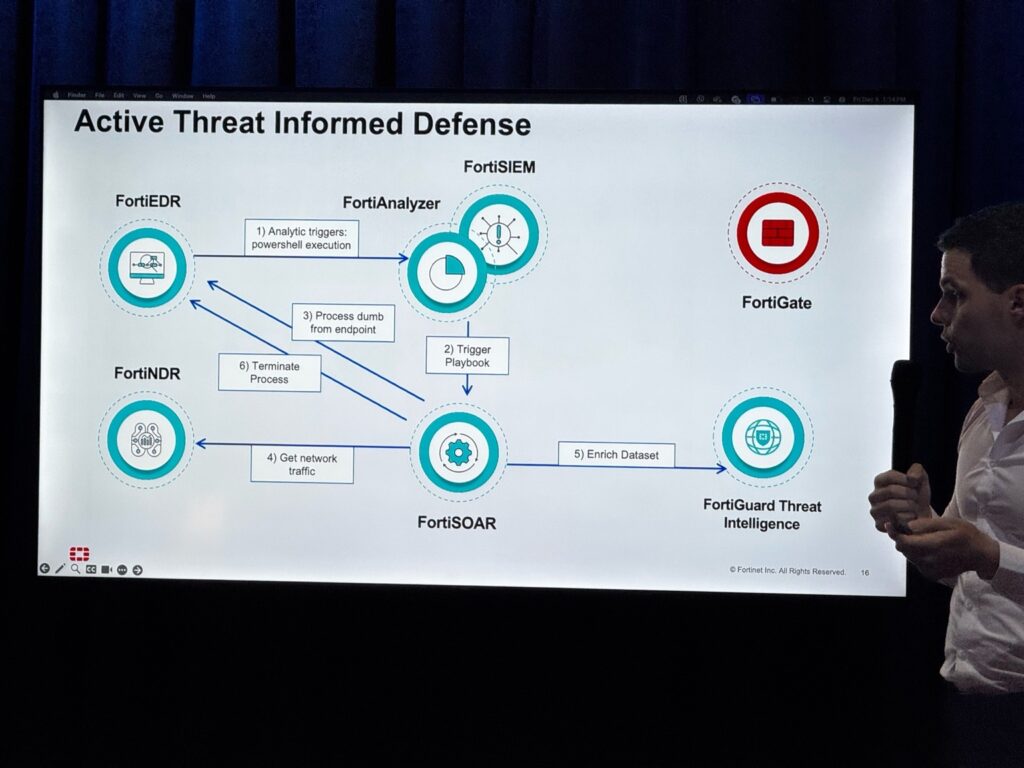
If attackers are automating and scaling, defenders must respond with the same intensity. Fortinet predicts 2026 will accelerate the shift toward machine-speed defense, where intelligence, validation, and containment occur continuously and within minutes instead of hours.
Frameworks such as CTEM (Continuous Threat Exposure Management) and MITRE ATT&CK will be essential in helping organizations identify exposures, map active threats, and prioritize remediation based on live data.
But perhaps the biggest shift is around identity. With AI agents, automated processes, and machine-to-machine interactions becoming part of daily operations, organizations must secure not only human identities but the growing number of non-human ones as well.
Bambi Escalante, Fortinet Philippines Country Manager, stresses this point: “Static configurations and periodic assessments can’t keep pace with an environment where attackers automate reconnaissance, privilege escalation, and extortion in minutes. What organizations need is a unified, adaptive security posture—one that brings together threat intelligence, exposure management, and incident response into a continuous, AI-enabled workflow.”
Managing these machine identities becomes critical to preventing large-scale privilege escalation and data exposure.
Collaboration and Deterrence: A Global Effort
Fortinet emphasizes that industrialized cybercrime demands a more coordinated global response. Initiatives such as INTERPOL’s Operation Serengeti 2.0, supported by Fortinet and other private-sector partners, demonstrate how intelligence-sharing and targeted disruption can dismantle criminal infrastructure.
The company also highlights the Fortinet–Crime Stoppers International Cybercrime Bounty Program, which gives communities a safe way to report cyberthreats and suspicious activity—an important step in scaling deterrence.
FortiGuard Labs expects further investment in educational and deterrence programs aimed at young and at-risk populations, who are increasingly being drawn into online criminal ecosystems. Preventing the next generation of cybercriminals begins with redirecting them before they enter the system.
Looking Ahead: What 2027 Might Bring
By 2027, Fortinet predicts cybercrime will operate at a scale comparable to major global industries. Offensive operations may see further automation through agentic AI models—swarm-like systems capable of adapting to defender behavior.
Supply-chain attacks targeting embedded systems and AI infrastructure may also become more sophisticated. Defenders will need predictive intelligence and automated exposure management to anticipate and contain incidents quickly.
In Fortinet’s view, the next decade will be defined by velocity and scale. Organizations that unify human expertise, automation, and real-time intelligence into one adaptive system will be best prepared for what’s coming.
The Bottom Line
Cybercrime is no longer a collection of isolated attacks; it’s an industry evolving at machine speed. Attackers are scaling up through AI, automation, and organized underground markets. But defenders can respond—if they embrace continuous intelligence, identity-centric protection, and automated response.
In 2026, cybersecurity won’t be a battle of who has the most advanced technology.
It will be a battle of who can act faster.
And in this new era, speed isn’t a luxury—it’s survival.