
Tonik’s Payhinga Shows Why the Next Fintech Innovation Isn’t Faster Loans—It’s Better Repayment
For years, digital lenders have competed on speed. The promise has always been the same: approve more loans, process applications faster, and get money into customers’ hands in minutes.
But as economic pressures continue to affect Filipino households, a different question is becoming just as important: What happens after the loan is approved?
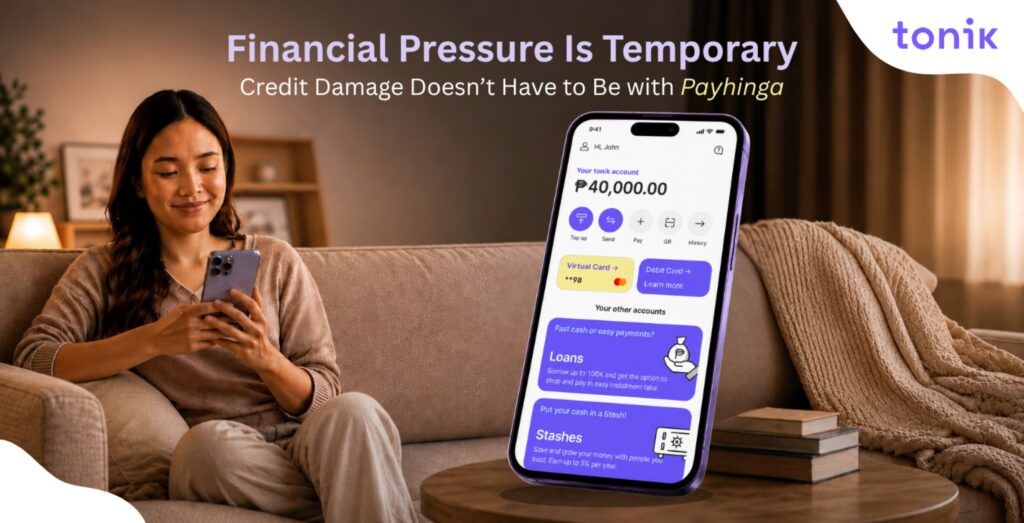
Tonik Digital Bank believes the answer lies in giving borrowers more flexibility rather than waiting until they fall behind. The bank has reported a threefold increase in the use of Payhinga, its built-in loan payment holiday feature, as more Filipinos turn to repayment support during temporary financial setbacks.
According to Tonik, Payhinga activation has grown from 10 percent of eligible customers in January 2025 to nearly 31 percent, reaching almost 34 percent during periods of heightened economic pressure.
Unlike traditional loan restructuring, which often happens only after a borrower’s credit record has already been affected, Payhinga is an optional feature customers can select when taking out a loan. It allows repayments to be temporarily paused when unexpected financial challenges arise, helping borrowers avoid missed payments, penalties, and unnecessary damage to their credit profile.
The feature is available across Tonik’s consumer lending products and includes Credit Life Insurance provided by Sun Life Grepa Financial, Inc.
The trend also suggests a shift in how borrowers view financial planning. Over the past 17 months, Tonik recorded a 220 percent increase in customers choosing to include Payhinga when applying for loans. More importantly, the bank said actual usage accelerated during periods of economic uncertainty, indicating that customers are using the feature as intended—during genuine financial hardship rather than as a routine repayment option.
“Financial inclusion doesn’t end when a loan is approved,” said Mila Bedrenets, Chief Growth Hacker at Tonik. “Real financial inclusion means helping customers successfully repay their loans even when life becomes difficult. For many Filipino families, a temporary loss of income or a sudden increase in expenses shouldn’t permanently damage their financial future.”
Tonik said Payhinga was designed for working Filipinos, many of whom earn between ₱25,000 and ₱40,000 a month and serve as the primary breadwinners in their households. For these families, even a short interruption in income can create a chain reaction that affects loan repayments and future access to credit.
Rather than pushing borrowers toward delinquency, the payment holiday allows them to temporarily pause repayments before resuming once their financial situation stabilizes. According to the bank, this approach helps customers preserve their credit standing while supporting healthier long-term lending performance.
The strategy reflects a broader evolution in digital banking. As fintech platforms mature, success is increasingly measured not only by how efficiently loans are approved but also by how effectively borrowers are supported throughout the repayment process.
“Many digital lenders compete on how quickly they can approve loans,” Bedrenets added. “We believe the bigger responsibility is helping customers successfully complete their financial journey. A payment holiday may seem like a small feature, but during difficult economic periods it can make the difference between temporary hardship and long-term financial exclusion.”
As household budgets remain under pressure, repayment flexibility may become an increasingly important feature in digital lending. Instead of viewing lending as a transaction that ends once funds are released, banks are beginning to treat repayment support as part of the overall customer experience—an approach that could play a larger role in shaping the future of fintech in the Philippines.
Tonik is the Philippines’ first standalone digital bank licensed by the Bangko Sentral ng Pilipinas and insured by the Philippine Deposit Insurance Corporation (PDIC) for deposits of up to ₱1 million per depositor. Its lending and savings products are available entirely through the Tonik mobile app.