
PLDT Enterprise Expands SmartSafe With SIM, Device, Location and Roaming Checks
A correct password does not tell a business whether a customer’s SIM was recently replaced or moved to another phone. Those details can matter when deciding whether to approve a login, process a payment, or ask for additional verification.
PLDT Enterprise is bringing more of that network information into its SmartSafe authentication and fraud prevention suite with three new API offerings: GeoCheck, NetIdentity, and RoamStatus.
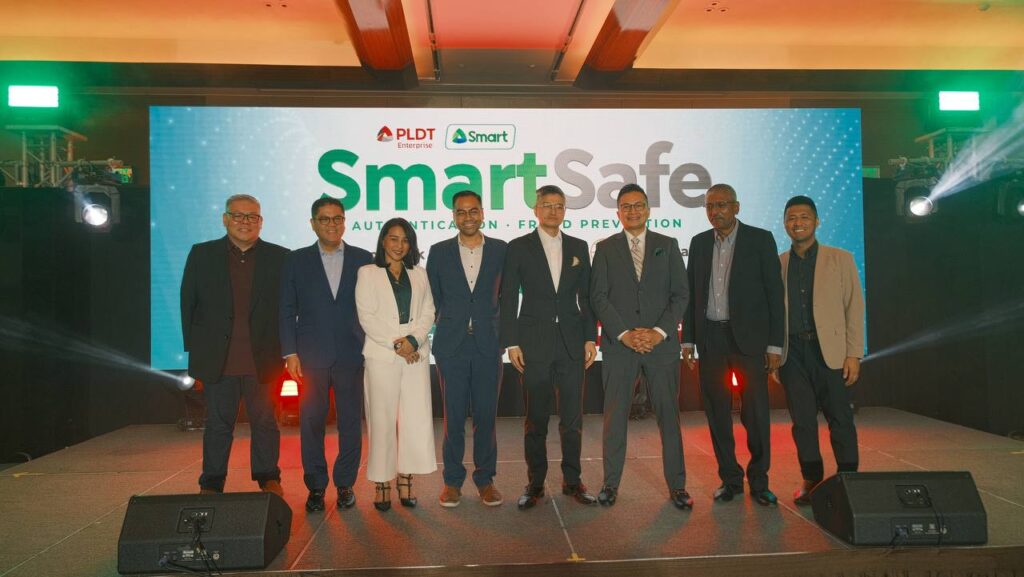
Introduced at the SmartSafe Authentication API Launch in Parañaque City, the additions give businesses more signals to assess digital activity. Instead of relying solely on information entered by a user, organizations can also check relevant information from the mobile network.
PLDT Enterprise describes SmartSafe as the Philippines’ first telco-enabled digital fraud management API suite globally certified by GSMA. The company also identifies the three additions as first-to-market offerings.
“Digital security should make people feel safer without making every transaction harder,” said Blums Pineda, Chairman of ePLDT and Head of Enterprise Business Group, PLDT Enterprise. “What we want to give businesses through SmartSafe is another way to understand the context behind a digital interaction. By making trusted network information available to enterprises, they can make better-informed security decisions while keeping the customer experience simple.”
What the new SmartSafe APIs check
Each addition addresses a different question about the mobile connection behind a digital interaction.
NetIdentity checks signals related to SIM and device authenticity. Its capabilities include SIM Swap and Device Swap APIs, which can indicate whether the SIM associated with a mobile number was recently changed or whether a SIM was transferred to another physical device.
For businesses, those changes can help determine when a login or transaction needs closer review. A customer replacing a SIM or upgrading a phone is not automatically suspicious; the information gives an organization another factor to consider alongside its other security checks.
GeoCheck provides location-related network intelligence. It allows organizations to validate whether a user is in the general vicinity of a transaction location, adding context beyond location information supplied by the user.
RoamStatus checks whether a mobile phone is being used domestically or while roaming abroad. PLDT Enterprise describes it as a simple roaming-status response, giving businesses that information without depending on a user’s own location declaration.
These signals serve different purposes. A SIM change concerns the connection associated with a number, a device change concerns the hardware using it, and location and roaming checks add geographic context. Together, they can help businesses decide whether an interaction warrants additional verification.
“Fraud continues to evolve, so protecting customers cannot depend on a single signal or a single security step,” said Nico Alcoseba, First Vice President and Head of Enterprise Product Management & Innovations, PLDT Enterprise. “The value of network intelligence is that it gives businesses more context. A change in a SIM, a different device, an unexpected location, or roaming activity can become useful information when an organization is deciding whether an interaction looks normal or deserves another layer of verification.”
Verification with fewer manual steps
The expanded suite builds on PLDT Enterprise and Smart’s work in network-powered authentication, including SmartSafe SilentAccess.
SilentAccess uses Smart’s network to verify users without requiring them to manually enter traditional one-time passwords in supported customer journeys. According to PLDT Enterprise, potential applications include onboarding, logins, higher-value transactions, and account recovery.
The distinction matters: SilentAccess handles verification in supported flows, while the new offerings provide additional signals that can inform risk assessments. Businesses can use that context to decide when further checks are appropriate.
For customers, the intended benefit is fewer interruptions during routine activity, with additional verification applied when the circumstances call for it. How smoothly that works will depend on how each business integrates the APIs and uses the information they return.
Building on GSMA Open Gateway
SmartSafe is part of PLDT Enterprise and Smart’s broader development of standards-based network APIs. Smart previously became the first Philippine telco provider to achieve GSMA Open Gateway API certification for Number Verification, according to the company. Subsequent certifications and developments have expanded its capabilities for enterprise authentication and fraud prevention.
The Parañaque launch included a product presentation and a panel discussion with leaders from PLDT Enterprise’s wireless platforms, product innovation, and product development teams. Discussions focused on digital trust and the role of network APIs as more customer transactions move online.
“Trust is built in the small moments when customers log in, make a payment, access an account, or simply expect a digital service to work safely,” said Josh Montecillo, AVP and Head of Enterprise and International Wireless Product Management, PLDT Enterprise. “With SmartSafe, we want to help businesses protect those moments in ways that are both intelligent and seamless. Security becomes most meaningful when people can go about what they need to do with greater confidence.”
SmartSafe’s expanded suite gives businesses more information to work with when assessing a digital transaction. A recent SIM swap, a device change, or roaming activity can prompt a closer look, but none should be treated as proof of fraud on its own.
The practical value will come from how businesses combine those signals with their existing security controls. Used well, network intelligence could help them identify interactions that need extra scrutiny while keeping routine transactions straightforward for legitimate customers.